Evenement is afgelopen
Dit evenement heeft al plaats gevonden. Hierdoor is het niet langer mogelijk om je voor dit evenement in te schrijven. Klik op `Bekijk alle cursusmomenten` om naar de cursuspagina te gaan en om een ander cursus moment uit te zoeken.
08 November 2025 (2 dagen)
- 08-11-2025: 09:00 - 17:30
- 09-11-2025: 09:00 - 17:30
Amsterdam
- Incitus HQ
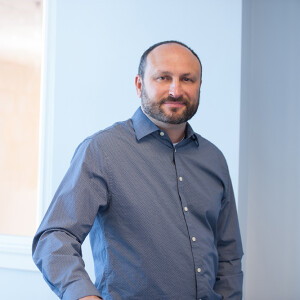
- Dr. Eric Nelson
- Engels
Neurokinetic Therapy® (NKT) Level 1 – Master in Motor Control & Bewegingsanalyse
Ontdek de ontbrekende schakel in je klinisch redeneren: hoe de hersenen beweging organiseren, compenseren en beschermen via complexe motor-control patronen.
Neurokinetic Therapy® Level 1 introduceert een krachtig kader voor assessment en behandeling waarmee je leert begrijpen waarom bepaalde spieren overwerken, waarom andere ‘uitvallen’, en hoe deze disfunctionele patronen bijdragen aan aanhoudende pijn, mobiliteitsbeperkingen en prestatiedaling.
Deze cursus is de perfecte basis voor fysiotherapeuten, manueel therapeuten, sporttherapeuten en andere movement professionals die de oorzaak van een probleem willen aanpakken in plaats van enkel de symptomen.
Waarom Neurokinetic Therapy?
Chronische of terugkerende klachten komen zelden door één lokaal weefselprobleem — maar door geleerde motorische patronen.
NKT helpt je de neurologische hiërarchie achter de klachten van je patiënt zichtbaar te maken door:
- Spiertesten gekoppeld aan motor-control theorie
- In kaart brengen van compensatiepatronen
- Inhibitie–facilitatie relaties
- Hands-on assessment met directe her-test
- Correctieve strategieën gericht op herprogrammering van het brein
Deze methode biedt een nauwkeurig test–retest beslismodel dat verborgen disfuncties snel blootlegt en je behandeling doelgerichter en effectiever maakt.
Wat je gaat leren
NKT Level 1 leert je het volledige framework toepassen:
- Je verdiepen in de neurofysiologie van motor control (cerebellum, motorische cortex, limbisch systeem)
- Gestructureerde spiertesten uitvoeren en compensaties analyseren
- Geïnactiveerde spieren en overactieve synergisten identificeren
- Behandelreeksen bouwen met soft-tissue release + gerichte motor-control oefeningen
- De NKT-methode toepassen op veelvoorkomende casussen: lage-rugklachten, heup- en schouderdysfuncties, nekklachten, post-trauma compensaties, en meer
Je gaat naar huis met een reproduceerbaar klinisch algoritme dat je direct kunt inzetten in de praktijk.
Is deze cursus geschikt voor jou?
Dit programma is ideaal voor clinici die:
- Werken met complexe, terugkerende of onverklaarde MSK-klachten
- Een brein-gebaseerde benadering willen integreren in hun assessment
- Werken met een test–retest werkwijze en directe feedback
- Een gestructureerd systeem willen dat complementair is aan manuele therapie, revalidatie of sportprestaties
Of je nu met atleten werkt, met chronische pijnpatiënten of met functionele revalidatie: NKT geeft een unieke diagnostische scherpte.
Cursusopzet
- Niveau: Basismodule (verplicht voor Level 2)
- Duur: 2 dagen, volledig praktisch
- Vorm: Interactief, partner testing, casuïstiek
- Docent: Gecertificeerd NKT Level 3 instructeur
- Accreditatie: PE-punten (land/vereniging afhankelijk)
Hoe kun je je het beste voorbereiden?
- Volg de online cursus Anatomie & Kinesiologie en maak de test
- Bestudeer de anatomie en kinesiologie in het boek NeuroKinetic Therapy®
- Maak jezelf vertrouwd met de spiertesten zoals beschreven in datzelfde boek
Verplichte literatuur
- NeuroKinetic Therapy – David Weinstock
Aanbevolen literatuur
- Movement – Gray Cook
- Assessment and Treatment of Muscle Imbalance – Phillip Page
- Anatomy Trains – Tom Myers
Cursus planning
- 08:30 - 09:00: Registratie met koffie en thee
- 09:00 - 10:00: Discussion of theory of NeuroKinetic Therapy; Understanding how MCC coordinates and controls body movements; How to assess muscles imbalances.
- 10:00 - 11:00: Discussion and demonstration of muscle testing for lower back (psoas, tranverse abdominis, quadratus lumborum, transversospinalis); Learning to do specific muscle tests. Learning and practicing Directional Testing.
- 11:00 - 12:00: Demonstration for lower back assessing & muscle testing (sacroiliac, adductors, deep gluteals).
- 12:00 - 13:00: Discussion and demo of muscle testing for gluteals, deep rotators, adductors and abductors.
- 13:00 - 14:00: Lunch
- 14:00 - 15:00: Practice and supervision; Assessing, testing.
- 15:00 - 16:00: Discussion and demo for quads, hamstrings and muscles of the knee.
- 16:00 - 17:30: Practice and supervision; Assessing, testing.
- 08:30 - 09:00: Welkom met koffie en thee
- 09:00 - 10:00: Discussion and demo for muscles of lower leg (gastroc, soleus, tibialis posterior and anterior, peroneus, and foot muscles).
- 10:00 - 11:00: Practice and supervision; Assessing, testing.
- 11:00 - 12:00: Discussion and demo of muscle testing for rotator cuff, deltoids, traps, lats, rhomboids and pectorals.
- 12:00 - 13:00: Practice and supervision; Assessing, testing.
- 13:00 - 14:00: Lunch
- 14:00 - 15:00: Discussion and demo of muscle testing for biceps, triceps, forearm muscles, and hand muscles.
- 15:00 - 16:00: Practice and supervision; Assessing, testing.
- 16:00 - 16:30: Discussion and demo for muscle testing for neck muscles (scms, scalenes and extensor group).
- 16:30 - 17:30: Practice and supervision; Assessing, testing.